| Welcome to my blog!

Meet the Author

Roshan is an undergarduate student in Information and Communication Technologies from Vavuniya Campus of the University of Jaffna.He is very much interesting on IT related Topics and the technical stuffs.Roshan is also a creative mind with lots of ideas and potential writter..!

Subscribe to this blog!

Receive the latest posts by email. Just enter your email below if you want to subscribe!

Showing posts with label docs. Show all posts

Tuesday, January 6, 2015

How we easily check/edit CSS Attributes/Structure of a Web Site!

Interface in Firefox Browser
Select the are and click inspect element

Use your Browser.

Almost every  browser provide this feature.Still if you need more advanced features you can use an Extension like Firebug. All you need to do is selecting the area you want to check and right click and select inspect element from the menu you get! you may come with following interfaces like follows!


Interface in Chrome.

Use this to Web Development 

There you can check the site style settings and structure when you go through the codes!.This tool comes handy when you are a developer and you need to edit and style your site you can check your site from here and you can apply your codes here or change the values on CSS attributes and check how will it affect your site.without editing your source and after check the appropriate settings you can add the code/changed values to the original source!

Use it in learning purpose 

And this also comes handy when you want to study the structure of a other site and see what are the setting or attributes they have used to style their pages.Why not use this and learn some CSS  tags! :)

Some Extra Info!

Also here i should mention this. if you are maintaining a site or if you are a developer of your own site lets say,in your original code you have used some external style sheets or links for Java Script functions or Google APIs (Ex::In your blogger theme you may have used Bootstrap in your site),In this browser window it will show you the basic structure and you can change attributes and check but you may not find the place in you code that's because the particular part and CSS  setting is externally linked to your site.So in this case you may do custom styling by putting style tags in your site script or doing CSS injection or pass parameters to the JavaScript function this will depend on the source you use. 

Monday, January 5, 2015

Web Browser එක හාවිකා කර CSS Settings හදමු.!

Firefox Browser එකේ දිස්වන අයුරු
අවශ්‍ය area එක select කරලා  inspect element තෝරන්න

Browser එක භාවිතයෙන්..!

හැම  browser එකක්ම වාගේ මේ feature එක සපයනවා. තවත්  advance features ඔන නම් අපිට  Firebug වගේ Extension එකක් භාවිතා කරන්න පුලුවන් ඒත් මම කියන වැඩේට එච්චර සංකීර්ණ සූදානමක් ඕන නැහැ. කරන්න තියෙන්නේ මෙච්චරයි අවශ්‍ය area එක  ලගට මවුස් එක අරන් ගිහින්  right click කරලා inspect element තෝරන්න එවිට පහත පරිදි interfaces දකින්න ලැබේවි. 

Chrome Browser එකේ දිස්වෙන අයුරු

Web Development සදහා මෙම ක්‍රමය භාවිතය.

ඔබට පුලුවන් මේ ලැබෙන මුහුණතින් ඔබේ HTML කෝඩ් එක පරික්ෂා කරන්න .ඔබ වෙබ් අඩවි නිර්මාණකරුවෙක් නම් මේ පහසුකම ඔබේ වෙබ් අඩවියේ අවශ්‍ය කරන සැකසුම් පරික්ෂා කිරීමට යොදාගන්න පුලුවනි.මේහිදී ඔබේ  source කොඩ්  එක වෙනස් නොකර අවශය කරන සැකසුම් පරික්ෂා කරලා බලන්න පුලුවන් .පසුව වඩාත් ගැලපෙන සැකසුම් ඔබේ  source කෝඩ් එකට ඇතුලත් කරන්න.

ඉගෙනීම සඳහා භාවිතා කරමු.

ඔබට මෙම ක්‍රමය පාවිච්චි කරලා එදිනෙදා ඔබ යන වෙබ් අඩවි වල පාවිච්චි කරලා තියෙන CSS tags බලන්න පුලුවන්  :). ඉතින් මෙ ක්‍රමයෙන් සයිට් එකක පාවිච්චි කරලා තියෙන මේ ටැග්ස් ගැන ඒවායේ තියෙන සැකසුම් ගැන ඉගෙන ගන්න පුලුවන් නේද?.

තවත් තොරතුරක් !

මේ ක්‍රමය පාවිච්චි කරන කෙනෙක්ට මේ වගේ ප්‍රශ්නයක් එන්න පුලුවනි.අපි Browser එකේ මේ වෙනස්කම් කරලා ඒක අපේ මූලික කේතයේ හෙව්වම එතන ඔයාට හොයාගන්න බැරිවෙයි ඒකට හේතුව ඒ අදාල කරන සැකසුම් තියෙන්නේ ඔයාගේ කෝඩ් එකේ නෙවෙයි.ඔයා refer කරලා තියෙන වෙනත් තැනක මෙතනදි ක්‍රම දෙකක් තියෙනවා එකක් ඔයාගේ කොඩ්/ස්ක්‍රිප්ට් එකේ මේ සඳහා වෙනම සැකසුම් ඇතුලත් කල හැකියි.(මේ සඳහා CSS දැනුම තියෙනවා කියලා මම හිතනවා හම්ම් පුලුවන් වුනොත් පෝස්ට් එකක් දාන්නම්!) එහෙම නැතිනම් ඒ අදාල සැකසුම් ඒතැනට යවන කුමයක් තියෙනවා.ඒක හැබැයි ඔයා refer කරන තැන අනුව වෙනස් වෙනවා.මේක හරියට අපි parameters පාස් කරනවා වගේ වැඩක් ඒ අදාල function එකට. 

Sunday, January 4, 2015

Google Chrome theme එකක් ලේසියෙන් හදමුද?


මේක ඇත්තටම ගොඩක්ම ලේසි වැඩක් කරන්න තියෙන්නේ ගුගල් දෙන ඇප් එකක් පාවිච්චි කරන්න විතරයි! මේ වගේ ලොඩක් themes බලන්න ඕන නම් Google’s Chrome Web Store එකේ  themes for Chrome යන්න.එතැන ගොඩක් themes තියෙනවා ඔයාට පාවිච්චි කරන්න පුලුවන්! හරි අපි දැන් අපේම එකක් හදන්නනේ යන්නේ වැඩේ පටන් ගමු!

මුලින්ම මොකද්ද??

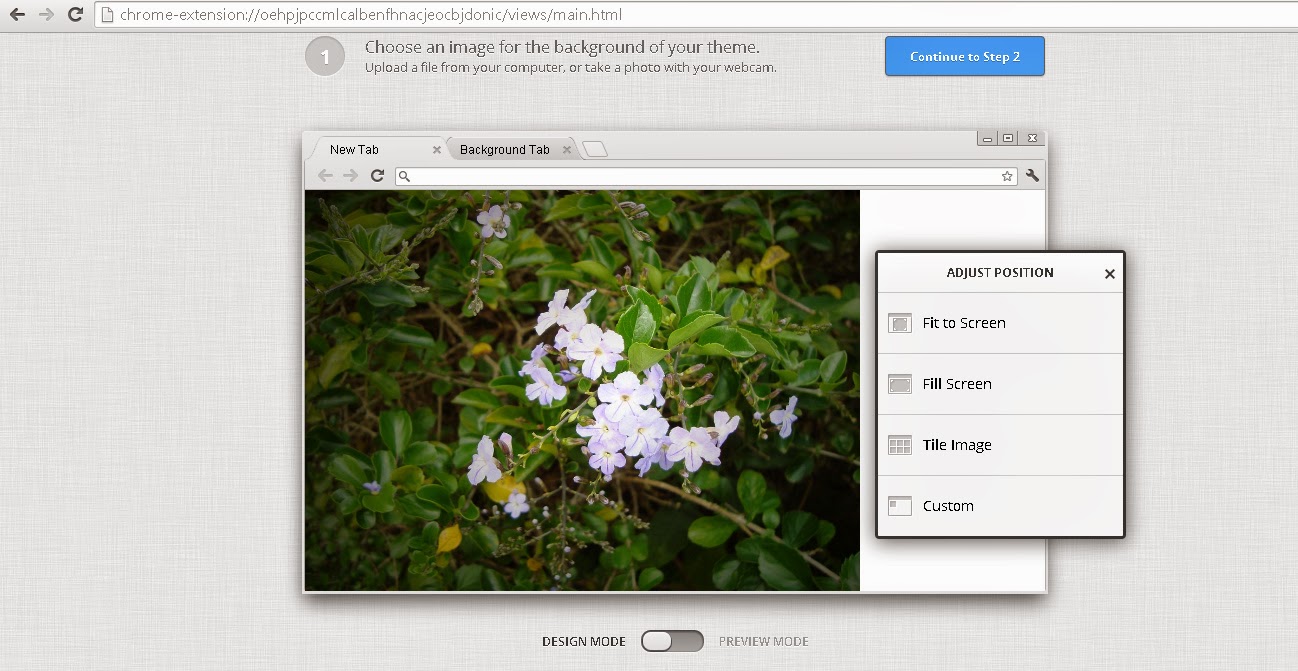
මුලින්ම ගිහින් මේ ඇප් එක ගන්න My Chrome Theme app දැන් ඒක ස්ථාපනය(install) කරගන්න.දැන් ඔයාගේ බ්‍රවුසර් එකේ ඇප්ස් අතර මේ ඇප් එකත් පෙන්නාවි.ඒ ඇප් එක click කරන්න පහත වගේ වින්ඩෝ එකක් ඔයාට ලැබේවි. දැන් ඉතින් හරිම ලේසියි එකේ පිලිවලටම යන්න.ඊ තලත් දාලවේ තියෙන්නේ buttons වල.


Image එකක් තොරාගැනීම.

මේ සඳහා ඔයාට ඕනෑම ඔයා කැමති රූපයක් හරි ඔයාම නිර්මාණය කරගත්ත රූපයක් යොදාගන්න පුලුවන්!නැත්නම් වෙබ් කැමරාවෙන් රූපයක් ගන්නත් පහසුකම තියෙනවා.


මේ ඇප් එක පාවිච්චි කරලා ඔයා upload කල පින්තූරයට වෙනස්කම් කරන්නත් පුලුවන්.පින්තූරයට effects යොදන්න,size එක හදාගන්නත් පුලුවන්. දැන් ඊලගට...


වර්ණ යොදමු

මෙතනදී ඔයාට අවශ්‍ය පාට යොදන්න පුලුවන් ඔයා ගත්ත රූපෙට ගැලපෙන්න පාට යොදන්න පුලුවනි.මෙතන ඔයාට ඒ ඒ tab වලට වෙන වෙනම පාට තෝරන්න පහසුකම තියෙනවා.නැත්නම් Google ගේ  i am feeling lucky option එකත් තියෙනවා ඒ කියන්නේ ඇප් එකෙන් ඔයාගේ රූපයට ගැලපෙන පාට තෝරලා දෙනවා.


Theme එක ස්ථාපනය කිරීම සහ share කිරීම

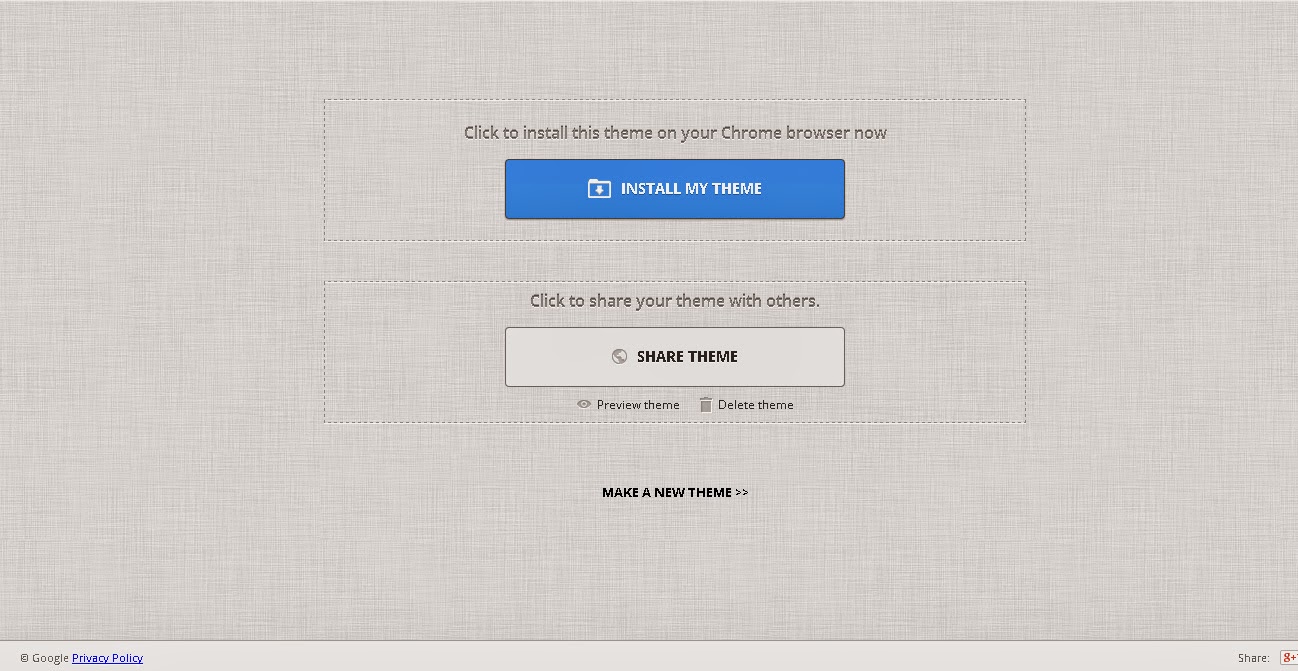
වැඩ ඉවරනම් ඊළඟ step එකේදි ඔයාට දකින්න ලැබේවි මේ theme එකට නමක් දෙන්න කියලා පනිවිඩයක් ඊට පස්සේ භාගත කරගන්න හරි share කරන්න හරි theme එක ස්ථාපනය කරගැනීමේ හරි පහසුකම තියෙනවා.share කරනකොට ඔයාට හම්බෙන link එක හැමෝටම share කරන්න තමා ඉතින් තියෙන්නේ.


How to create your own theme for Google Chrome Web Browser


Its really easy to create a simple theme in Google Chrome! Google’s Chrome Web Store offers a variety of themes for Chrome, which include background images for your new tab page and custom colors.
There is a official Google app which allows you to create a custom Google theme quickly and easily!
You can even share the themes you create.

Getting Started

First grab the My Chrome Theme app from Google.install it from the Chrome Web Store. It will appear on your new tab page, where your other installed Chrome apps do.


Choosing an Image

You can either upload an image file or capture an image from your webcam.choose an image and you can check how it looks like when it applied!


You can upload your own creation or a graphic or a photo or any one from another source.and you can add effects and resize the image and some editing through the App


Adding Colors

On the next screen, you’ll be able to choose separate colors for the frame, toolbar, and background color. Of course, this is a Google app, so there’s an “I’m feeling lucky” button that will automatically select some appropriate-looking colors for you. The automatically selected colors will attempt to match the background image you selected earlier.


Installing and sharing Your Theme

After you finished you will have an option to install your theme to your browser and share it with your friends!for sharing you'll get a link and you can share it with your friends through Google+, Facebook or using any other media you like!


Friday, January 2, 2015

Firefox theme එකක් ලේසියෙන් හදමුද?

මේක හරිම easy වැඩක්! අපි කරන්න හදන්නේ අපේම පින්තූරයක් භාවිතා කරලා Firefox themes හදන එක.මේක පුංචිම දෙයක් ඇත්තටම ලස්සනට ගොඩක් මහන්සිවෙලා මේ වැඩේ කරන්නත් පුලුවන් අද අපි පුංචිම තැනින් පටන් ගමු.Firefox themes එහෙම නැතිනම් “personas” වලට පුලුවන් ඔයාගේ browser එක ඔයාටම ඕන විදිහට වෙනස් කරන්න.
හරි වැඩේට යමු.Chrome වල මේ වැඩේ කරන්න කැමති අය මෙතනට යන්න.. Chrome theme එකක් ලේසියෙන් හදමුද?

ඉමේජ් එක සකසා ගැනීම

සරලම ෆයර් ෆොක්ස් theme එකේ images දෙකක් තියෙනවා.අපි කියමුකෝ ප්‍රධාන රූපය එහෙම නැතිනම්  header image එක තමා උඩ කොටස ආවරණය කරන්නේ.ඊලගට footer image එක පහල කොටසට නමුත් අලුත් ෆයර් ෆොක්ස් සංස්කරණ වල මෙම කොටස එච්චර භාවිතයක් නැති නිසා මේ රූපය අවශ්‍යම නෑ.
මේ විදිහට හදපු themes බලන්න මෙතනින්.
මුලින්ම ඔයා කැමති ලස්සන රූපයක්  දෙකක් හොයාගන්න පොඩ්ඩක් හිතල මේ තේරීම කරගන්න.මොසිල්ලා නම් කියන්නේ “Subtle, soft contrast images and gradients work best; highly detailed images will compete with the browser UI.” කියලා.මේකයි අපි මේ රූපය යොදන තැන ගැන හිතන්න ගොඩක්ම අපේ බ්‍රවුසර් එකේ දකුණු පැත්තනේ හිස් ඒ කියන්නේ රූපයේ ගොඩක් දකුණු පැත්තට ලස්සනට තිබ්බොත් නියමයිනේ.මේකට ඔයා යොදා ගන්න රූප දෙකට පහත අවශ්‍යතා තියෙන්න ඕන.

  • Header Image: 3000 pixels wide x 200 pixels tall, PNG or JPG format, 300 KB maximum file size
  • Footer Image: 3000 pixels wide x 100 pixels tall, PNG or JPG format, 300 KB maximum file size
ඔයාට පුලුවන් ‍මේ අවශ්‍යතා වලට ගැලපෙන රූපයක් යොදාගන්න එහෙම නැතිනම් ඔයාම එකක් නිර්මාණය කරලා යොදාගන්න දැන් ගොඩක් මෘදුකාංග තියනවා ඔයාට මේ සඳහා පාවිච්චි කරන්න පුලුවන්!ඔයාට පුලුවනි ඔන නම් රූපයක් තොරාගෙන අදාල මිනුම් වලට crop කරගන්නත්!


හදපු theme එක කොහොමද බලමු..

මේකට ඉතාම පහසු ක්‍රමයක් තියෙනවා.ඔයාට මේ සඳහා පොඩි එක්ස්ටෙන්ෂන් එකක් භාගත කරගන්න වෙනවා ඔයාගේ බ්‍රවුසර් එකට! මේක official extension එකක්!( Personas Plus extension.) දැන් browser එක restart කරන්න දැන් ඔයාට පෙනේවි ඔයාගේ toolbar එකේ දකුණු පැත්තේ පොඩි icon එකක්( පොඩි නරියෙක් ඔන්න! :p ) ඒක click කරල Preferences තොරන්න. “Enable custom personas” check box එක තෝරලා OK කරන්න.


ඊට පස්සේ  icon එක click කරලා custom Persona තොරලා Edit click කරන්න.දැන් ඔයාට වින්ඩෝ එකක් දකින්න පුලුවන් වෙයි ඔයාගේ theme එකට අදාල රූප, පාට,නමක් තෝරන්න තියෙන! ඉතින් මෙතනින් අදාල දේවල් තෝරන කොට ඔයාගේ browser එක වෙනස් වෙලා අදාල වෙනස් කම පෙන්නාවි.දැන් ok කලාම මේ theme එක ඔයාගේ browser එකට apply වෙනවා.
.

මේ theme ඕනෑම මෙහෙයුම් පද්ධතියක වැඩකරනවා.(Firefox on Windows, Linux, or Mac OS X.)

අපේ Theme එක ලොකේටම දෙමුද?

මේ වැඩේ හරිම ලෙසියි! ඔයා හදපු theme එක හැමෝටම පාවිච්චි කරන්න දෙන්න ඔයා කැමතිනම් කරන්න තියෙන්නේ එක Mozilla add-ons gallery website එකට ඇතුල් කරන එක.මේ සඳහා ඔයාට developer account එකක් ඕන.මේක නොමිලේ හදන්න පුලුවන්!ඔයා මේකට theme එක ඇතුලත් කරාම ලොකයේ Mozilla පාවිච්චි කරන හැමොටම කැමතිනම් ඔයාගෙ theme එක පාවිච්චි කරලා බලන්න පුලුවනි.rate කරන්න පුලුවනි  Mozilla add-ons gallery website එක හරහා.මේ සඳහා මේ සබැඳියෙන් යන්න.

How To Create a Simple Theme for your Firefox Browser..

Its easy to create Firefox themes by adding your own images.If you capable enough there are very advance theme making tools also.Firefox themes — also known as “personas” — can change the way your browser looks, making it more personal.
This isn’t too hard — all you need to do is find a background image or two and crop them to the correct proportions. Chrome users can check How to create simple themes for your Chrome Browser...

Get Your Images Ready

A simple firefox theme consists two images.The header image is behind everything at the top of the Firefox window, and the footer image is behind the Find and add-on bars at the bottom of the window. The latest versions of Firefox remove the add-ons bar unless you install an extension to bring it back, so the top image is much more important. You’ll only see the bottom image when you press Ctrl+F to use the Find toolbar.
You can find pre-made firefox themes from here.
First, choose a nice image that will work well on your top toolbar. Mozilla advises that “Subtle, soft contrast images and gradients work best; highly detailed images will compete with the browser UI.” the top right is the most visible part so its better to choose an image considering that fact. As you resize the browser window, more of the left side of the image will become visible.
These are the Sizes of the images you need

  • Header Image: 3000 pixels wide x 200 pixels tall, PNG or JPG format, 300 KB maximum file size
  • Footer Image: 3000 pixels wide x 100 pixels tall, PNG or JPG format, 300 KB maximum file size
Its better to find an image which suffice those requirements.BTW why not try your skills and do some Photoshop to create the image :). Anyway its up to you to design it!Or get a normal image and crop it using PhotoshopPixlr or any other software according to requirements mentioned!

You’d then crop your image — select Image > Crop in Pixlr — and you’d end up with a correctly sized image. You can now save it to your computer (File > Save in Pixlr). Repeat this process if you want a footer image, but make sure it’s only 3000×100 instead of 3000×200.

Enable and Configure Your Custom Theme

There is a way to test your theme without installing it!.To create a custom theme without submitting it to the Mozilla themes website, install Mozilla’s official Personas Plus extension. Restart your browser after installing it, click the Personas Plus icon on your toolbar, and select Preferences. Activate the “Enable custom personas” check box and click OK.


Now click on Personas Plus icon on the toolbar and go to custom Persona and click Edit.You'll get a window with an interface to add your images and select text colors.You will notice that when you add the image you'll be able to see it automatically appear on your browser.So browse for the header image file you created earlier and it will automatically appear on your Firefox toolbar.
Note that the footer image is optional — you’ll really only see if when you use the Find bar these days. If you don’t select a Footer image, the Find bar will just look like a normal part of the interface without any themes. Most people will probably be happy with that.
Select appropriate text and accent colors to make the browser’s toolbar text and icons stand out.

The resulting theme will work on every operating system, whether you’re using Firefox on Windows, Linux, or Mac OS X.

Showing  your  Theme to the world!

You can easily do this from Mozilla add-ons gallery website.All you need is a developer account its easy to create.So other people will be able to browse, install, and rate your theme on the Mozilla add-ons gallery website, use the Submit a New Theme page on Mozilla’s website.

Wednesday, December 24, 2014

SAFEGUARD THE COMMUNICATION NETWORK SYSTEMS IN CASE OF EVENTS SUCH AS SEVERE SUN STORM


this was created for submit in one of my campus assesment!
Roshan Karunarathna (rosh@vau.jfn.ac.lk)

1. INTRODUCTION


The sun’s magnetic and sunspot cycles have being expected to get peak from 2013, bringing a stormy season to our solar system and an increase in sun related damage here on Earth. - Power networks, pipelines, radio communications and the global positioning system (GPS) are all entering a period of increased risk of outages from geomagnetic storms as the solar activity cycle peaks in 2013.
Our sun is a massive ball of superheated gases that swirl with incredible currents and magnetic fields. At times the pressure builds up into sunspots, which can explode out from the sun in events known as solar flares, solar proton events (SPEs) and coronal mass ejections (CMEs).

2. IMPACT OF SOLAR STORMS


Solar events happen all the time, but 2013 was predicted to be a particularly bad year due to the peaking of several sun cycles. The last time this happened was in 1859 when the largest recorded solar storm spun compasses, disrupted telegraph service, and lit up the skies. Our dependency on electronics and an overloaded power grid makes us much more vulnerable to solar storms today.

“Solar storms” bombard the solar system – and Earth – with radiation and magnetic shock waves that can wreak havoc on magnetic fields, power systems, and electronics devices. The Earth’s atmosphere shields us from much of the radiation, but solar storms can still do quite a bit of damage, including:

•     Short out satellites and take down GPS, cell phone, Internet, and TV services.
•     Cause damage to electronic devices and computers.
•     Disrupt the power grid resulting in overloads, widespread power outages, and dangerous power surges. •     Increase corrosion and breakage of gas and fuel pipelines.
•     Confuse compasses and electromagnetic gadgets.
•     Cause light displays (like the “northern lights”) in the sky.
•     Knock out communications, including radio, military communications, and early warning systems.

3. IMPACT OF SOLAR STORMS ON COMMUNICATION NETWORK
Solar storms can affect radio communications, satellite communications, radars and navigation systems. When consider about effect on communications, in the past solar storms have caused billions of dollars of commercial satellites to malfunction and die prematurely. A Great solar storm has the power to destroy many space assets (Space Station, Space Shuttle, LEO Satellites, GEO Satellites, and Off World Missions) simultaneously.


3.1 RADIO COMMUNICATION


On frequencies below 30MHz, the ionosphere generally acts as an efficient reflector, allowing communications to distance. Solar extreme ultraviolet and soft x-ray emissions from solar flares change the electron density and gradients in the ionosphere reflections. A sudden increase of x-ray radiation from a solar flare causes substantial ionization in the lower region of the ionosphere producing ionospheric disturbances of radio signals, sudden phase anomalies, sudden enhancement of signals and short wave fade. Solar flares also produce a wide spectrum of radio noise (Cohen N and et al., 1994).
Polar cap absorption (PCA), aurora absorption, multipatting and non-great circle propagation effects are associated with coronal mass ejections (CMEs) that can disrupt radio communications. The effects of solar storms on radio communications through ionospheric reflectivity and scintillation include (NSSA, 2007, Barnes, P.R and et al., 1991)


3.2 SATELITE COMMUNICATION
In our technology driven society, satellites play an important role in communications. The loss of satellites can affect: major news wire service feeds, network television, satellite Television and cable programming, nationwide radio service, weather data, cell phone service, pagers, automated teller machines, gas station credit card handling services, airline weather tracking services, earthquake monitoring network, blackberries, GPS navigation service, and critical military & airline communications. And this list grows longer every day.
Current commercial satellites are light-weight, sophisticated, built at the lowest cost using off-the- shelf electronics. This current low cost approach makes new satellite design more vulnerable to damage from solar storms due to less radiation hardening. A high-energy particle from an SPE can penetrate the wall of a satellite and deposit sufficient charge to cause an electrical upset to a circuit switch, false command, memory state change or loss. As the nuclear particles collide within the spacecraft, they release electrons that build up an internal dielectric charge. This static charge can destroy circuitry on electronic boards. The particles can also change data and instructions stored in computer memory. Some of the memory damage is soft causing Single Event Upset (SEU). Generally, this anomaly can be corrected by a computer reboot. But some of the damage can be hard causing unrepairable physical damage to the junction of the microcircuit. These types of failures can be fatal. Satellites receive their operating power from large solar panels arrays. High-energy protons from SPEs and CMEs can damage the solar cells by causing the silicon atoms in the solar cell matrix substrate to violently shift position which produce crystal defects. These defects increase the resistance of the solar cells to electrical current. As a direct result, solar cell efficiency steadily decreases and solar panel power drops off.

One critical satellite system that is very sensitive to damage from solar storms is the Attitude Control System. If the system is damaged or compromised, the satellite will become disoriented. Without accurate orientation data, the satellite will be unable to make fine adjustments to its orbit to prevent the satellite from reentering Earth’s atmosphere and burning up.
Another threat is differential charging. Charged particles striking different areas of a spacecraft can cause these sections of the spacecraft to be charged to different levels.


3.3 SUMMARIZED EFFECTS CONSIDERING DIFFERENT ASPECTS


•    HF Radio Communication(3.3.MHz)
o    Increased absorption.
o    Depressed maximum usable
frequencies (MUF).
o    Increased fading and flutter
o    Effect short–wave propagation
through sunlit side of earth.

•    VHF propagation (30 – 300MHz)
o    Effect pagers and cellular phones
o    Susceptibility to fadeout of the high and low band in mobile voice communications for
dispatching utility company line crews

•         Satellite communications (200MHz to several GHz)
o    Increased scattering of satellite- to-ground ultra-high frequency (UHF) transmissions or
scintillation can seriously interfere with direct satellite communications links

•     Radio frequency interfere (RFI)
o    Loss of phase lock
o    Severe distortion of data
transmissions from
geosynchronous satellites
o        Erroneous positioning information from single frequency GPS
o    Drastic loss in spacecraft electrical power due to inability to reposition craft.
o    Faraday rotation of the plane of polarization effect on satellites that employ linear polarization up to 1GHz

•     Radar surveillance systems
o    Azimuth angle errors
o    Range errors
o    Radar energy scatter due to
auroral interference
o    Elevation angle errors

•     Navigation systems
o    position errors
o    Scintillation of GPS signals
o    Inaccuracy due to the
introduction of small delays
from GPS satellite signals
o    fadeout of signals

4. PREVENTIVE MEASURES
Having analyzed the threats that can be caused by solar storms upon the improved technologies being enjoyed today, it is necessary to highlights measures to mitigate them. So protecting Network Communication systems is also got a vital importance due to the reason modern world is depend on such technologies mostly. These precautionary measures include but not exhaustive of the following:
o    Use of series capacitors to block the flow of GIC in transmission lines or neutral – blocking capacitors in transformer neutrals.
o    Putting sunscreen on all technology.
o    Replacement of copper wires with optical fibers by telecommunications operators
o    Installation of solar storm warning system (solar monitor) that can offer up to date information on solar activity, including images, flares locations, flare predictions.
o    Use of shorter transmission cables as they are less vulnerable to damage.
o    Long term preventive measures also exist to protect against coronal mass ejections, including digging transmission cables into the soil, placing lighting rods on transmission wires, reducing operating voltages of transformers and using cables that are shorter than 10 kilometers. It might also be possible to develop and deploy large resistors that would add another level of protection to large transformers.
o    Incorporating solar storm hardening into satellite design.
o    By receiving geomagnetic storm alerts and warning (e.g. by the space weather prediction center, via space weather satellites), power companies can minimize damage to power transmission equipment by momentarily disconnecting transformers or by inducing temporarily blackouts.


4.1 PREPARING FOR OUTAGES

The biggest threat of a solar super storm is a knockout of the power and communications grids that might take some time to repair. You can prepare for this the way you’d prepare for any kind of storm, by stocking up on:

Off the Grid Power: Buy a generator and extra fuel, or install a backup energy supply such as solar panels or a wind turbine.

Battery Backup for Computers: An Uninterrupted Power Supply (UPS) looks a lot like a standard surge protector but contains batteries that keep computers running smoothly without damage during power fluctuations and brownouts.


Emergency Supplies: Create an emergency box with flashlights, batteries, cooking and heating fuel, food, and clean water. Also, consider a backup stash with paper copies of financial and personal records, cash, road maps, address book, radio, first-aid kit, and anything else you’d need if your handy digital gizmos – along with your car, credit cards, bank, and shopping center – are out of commission for a while.

Figure 1.Portable generator
Preparing for Power Surges
Likewise, a powerful solar storm may cause major power surges that might fry anything in its path. Protect your electronics by using:
1.    Whole House Surge Protector: A whole house surge protector connects to your breaker panel and provides protection from lightning and other power surges.
2.    Individual Surge Protectors: For added protection, or in the absence of a whole house surge protector, install surge protectors on computers, TVs, stereos, and other electronics in your home.
Figure 2.Surge Protector

3. Unplug Electronic Devices: Simply unplugging electronic devices will also ensure that they aren’t zapped by a power surge.                                   


5 SUGGESTED SYSTEMS AND SOLUTIONS FOR A SECURE COMMUNICATION NETWORK SYSTEMS


5.1 "SOLAR SHIELD" COULD HELP KEEP”THE LIGHTS ON”TO HAVE A CONTINUE
POWER OVER DEVICES.

"Solar Shield is a new and experimental forecasting system”. We can zero in on specific transformers and predict which of them are going to be hit hardest by a space weather event. The troublemaker for power grids is the "GIC" – short for geomagnetically induced current. When a coronal mass ejection (a billion-ton solar storm cloud) hits Earth's magnetic field, the impact causes the field to shake and quiver
During extreme storms, engineers could safeguard the most endangered transformers by disconnecting them from the grid. That itself could cause a blackout, but only temporarily. Transformers protected in this way would be available again for normal operations when the storm is over. The innovation of Solar Shield is its ability to deliver transformer-level predictions.

How it works:
Solar Shield springs into action when we see a coronal mass ejection (CME) billowing away from
the sun. Images from SOHO and NASA's twin STEREO spacecraft shows the cloud from as many as three points of view, allowing to make a 3D model of the CME, and predict when it will arrive.
While the CME is crossing the sun-Earth divide, the Solar Shield team prepares to calculate ground currents. The crucial moment comes about 30 minutes before impact when the cloud sweeps past ACE, a  spacecraft  stationed  1.5  million  km  upstream  from  Earth.  Sensors  onboard  ACE  make  in situ measurements of the CME's speed, density, and magnetic field. These data are transmitted to Earth and the waiting Solar Shield team.
Computer models predict fields and currents in Earth's upper atmosphere and propagate these currents down to the ground." With less than 30 minutes to go, Solar Shield can issue an alert to utilities with detailed information about GICs.
This idea of Solar Shield is experimental and has never been field-tested during a severe geomagnetic storm. A small number of utility companies have installed current monitors at key locations in the power grid to help the team check their predictions.

5.2 EARLY WARNING SYSTEM


Geomagnetic storms are triggered when a billion tones or more of solar plasma erupts from the surface of the sun at speeds of up to 3,000 kilometers per second, in what is known as a coronal mass ejection (CME).
If the mass ejection occurs in the direction of Earth, it can interact with the planet's own magnetic field and induce a substantial voltage on the surface. Long man-made conducting paths such as transmission lines, metallic pipelines, cables and railways act as antennae, focusing and transferring the current.
But CMEs are difficult to predict. They often batter Earth about four to five days after a solar flare is observed, but not always. The Advanced Composition Explorer (ACE) satellite, stationed a million miles from Earth, can detect the intensity of an incoming storm but may give as little as 30 minutes warning of its arrival. Forecasters issue a Sudden Impulse Warning, which indicates the Earth's magnetic field will soon be distorted by an incoming geomagnetic disturbance.
Demand for solar weather predictions and warnings has grown rapidly from operators of power, communications and navigation systems and airlines, but the crucial ACE satellite is aging and nearing the end of its useful life.


5.3 NETWORK SECURITY SYSTEM


5.3.1    USING POWER SURGE PROTECTORS


The devices should be protected with power surge protectors. After a situation, all grids have procedures for a "black start" following complete collapse: first by starting up specialist diesel generators, re-energizing selected power plants, connecting them to the grid, then gradually bringing the rest of the power generating sets back online and gradually restoring power to customer’s one area at a time. Less likely (but much more damaging) would be if a storm caused some of the extra-high voltage (EHV) transformers on the network to overheat and burn out. Most networks have only limited supplies of EHV transformer components, and there would be long lead-times for designing, manufacturing and installing new ones.


If a large number of transformers were fried, it might take months to restore power, according to a report on the "Effects of Geomagnetic Disturbances on the Bulk Power System" published by the North American Electric Reliability Corporation (NERC) in February 2012.

5.3.2    ACT WHEN TRANSMISSION IS IN HIGH DEMAND


Risks to the network and transformers are heightened when power lines and transformers are operating close to capacity. The biggest danger comes in spring and autumn, when a relatively small number of power plants are operating and transmission is in high demand. The simplest way to safeguard the network is to cut the demand for transmission, which lowers the operating temperature of the transformers so they have more room to rise safely without causing permanent damage. Grid operators can cut pressure on the network by increasing the amount of local generation (calling up more units from standby). In extreme cases, customers' power can be disconnected. Better a temporary loss of supply than one that lasts for months. Upgrading to newer and more reliable transformers can also harden the network against the risk of burn-out and failure.
Interest in space weather prediction is rising. The hope is that even a few minutes’ notice about an incoming storm at level G4 or G5 could allow networks to move to a safer operating mode or temporarily shut down as a precaution.


REFERENCES..


Web References…

1.   http://www.space.com/713-space-storm-hits-earth-survives.html
2.   http://www.solarstorms.org/SWChapter1.html
3.   http://www.todayshomeowner.com/how-to-protect-your-home-from-solar-flares- and-solar-storms/
4.   http://science.nasa.gov/science-news/science-at-nasa/2010/26oct_solarshield/
5.   http://www.solar-facts-and-advice.com/coronal-mass.html

Papers….

1.    Impacts of solar storms on energy and communications technologies
*Omatola, K.M. and Okeme, I.C.
Department of Physics, Kogi State University, Anyigba, Nigeria

Tuesday, December 16, 2014

මොකද්ද මේ JADE???

           මම මේ කියන්න යන්නේ සමහර අයට එච්චර සමීප නැති මාතෘකාවක් ගැන! මේ දවස්වල පරිගණක ක්‍රේෂ්ත්‍රයේ අය අතර ජනප්‍රිය මාතෘකාවක්නේ මේ කෘතිම බුද්ධියක් සහිත වැඩසටහන් නිර්මාණය.මේක ගොඩක් ගැඹුරු සිද්ධාන්ත තියෙන ඒත් ඒ වගේම තවමත් පරීක්ෂණ මට්ටමේ වැඩ ගොඩක් කෙරෙන මාතෘකාවක්...ඒකෙ එක් කේෂේත්‍රයක් කමා මේ Agent Technology කියන්නේ.
මුලින්ම මේ කියන්නේ මොකද්ද කියලා මම කියන්නම්... Agent කෙනෙක් කියලා අපි හඳුන්වන්නේ කෘතිම බුද්ධිය කියන සිද්ධාන්ත පාවිච්චි කරමින් තම දැනුම නැත්නම් තීරණ ගැනීමට අවශ්‍ය කරන දත්ත එක් කරගන්න ගමන් එෟවා පාවිච්චි කරමින් විවිධ මෙහෙයුම් (process) කියාවලීන්(procedures) කිරීමට නිපදවු නැත්නම් ක්‍රමලේකනය කළ පරිගණක වැඩසටහනක්! උදාහරණයක් විදිහට අපි වෙබ් අඩවියක මේ වගේ උපක්‍රම භාවිතා කරනවා කියලා හිතමු.එතකොට අපේ මේ වැඩ සටහනට පුලුවන් මේ සයිට් එකට එන(log in) කට්ටියගේ(users)  කැමති දේ අකමැති දේ තීරණය කරන්න අපි වැඩියෙන් ක්ලික් කරන්නේ මේ සයිට් එකේ මොන ලින්ක්ස් ද එහෙම නැතිනම් ප්‍රවෘත්ති වෙබ් අඩවියක් නම් වැඩියෙන් බලන්නේ මොන ප්‍රවෘත්තිද(ආර්ථික,ක්‍රීඩා,ඕප දූප) කියලා මෙයා බලලා ඊලග පාර අපි එනකොට අපි කැමති දේවල් තොරලා අපිට පෙන්න ගෙනත් දෙනවා( මේක දැනට ගොඩක් දෙනෙක් කරනවා බලන්න් ඔයා e-Bay යනකොට ඔයා කලින් දවසේ හොයපු දේට සමාන දේ ඔයාට උඩින්ම පෙන්නනවා).ඒ වගේම මෙම තාක්ෂණය ගොඩක් තැන්වල පාවිච්චි වෙනවා දුරකථන ඉලෙක්ට්‍රොනික තැපෑලේදී තව ගොඩක් තැන් වල.


මොකද්ද මේ  JADE???
මේ තියෙන්නේ සයිට් එක

Java Agent Development Framework, or JADE, කියන්නේ පරිගණක වැඩසටහනක්! මේ වගේ Agents ලා නිර්මාණයට තිබෙන මේ වැඩසටහන ජාවා ක්‍රමලේඛ භාෂාව යොදාගෙන නිපදවලා තියෙන්නේ.මෙමගින් අපිට උදව් කරනවා තව ඒජන්ට්ලා ත් එක්ක සම්බන්ධ වෙලා වැඩ කරන්න.මේ ගැන තව විස්තර සහ උදාහරණ සහිතව අපි කතා කරමු.මේ වැඩසටහන හදලා තියෙන්නේ Telecom Italia කියන සමාගමෙන් ඒ වගේම මේක free software.එකක්! බා ගන්න ඔනි නම් මෙන්න ලින්ක් එක
http://jade.tilab.com/
ප්‍රධාන  මුහුණත(main interface)


අපි ඉදිරියට මේක පාවිච්චි කරන හැටි ගැන කතා කරමු.මේ ගැන මගේ දැනුමත් ටිකක් නෙවෙයි ගොඩක් අඩුයි ඒ නිසා වැරදි දේ තිබෙනවා නම් නිවැරදි කරන්න.මෙහෙම සිංහලෙන් ලියන්න හිතුවේ කැම්පස් එකේ මේ සබ්ජෙක්ට්ස් මුලින් පටන් ගන්න කොට ග්‍රීක් වගේ නිසා අපි මේ සම්බන්ධ සිද්දාන්ත සමග ජේඩ් ගෙන් වැඩ ගන්න එක ගැන කතා කරමු අදට ඇති නේද???


මේ වැඩසටහන පාවිච්චි කරන කොට


මේ ගැන ලියවිලා තියෙන එයාලා නිර්දේශ කරන පොත මේක..මේ ලින්ක් එක මම වෙනත් සයිට් එකකින් තමා ගත්තේ.පුලුවන් අය ඉතින් පොත සල්ලි දීලා ගන්න එකයි ඇත්තේ ඔන්න අපි එහෙමනේ :පී!

මේ ප්‍රසන්ටේෂන් එකත් නියමයි බලන්න....


     කෘතිම බුද්ධිය ගැන කතා කරන කොට මම සඳහන් කල යුතුම පොතක් තියෙනවා.මේ මේ සම්බන්ධව ලියැවුනු සරළම සහ හොදින්ම විස්තර තියෙන පොත කියලයි මම හිතන්නේ.මේ පොතේ කතන්දරයක් කියන විදිහට ඉතා හොදින්ම මේ සංකල්ප කියලා දෙනවා.මම මේක කියෙව්වේ උසස් පෙළ කරලා ඉවර වුනු ගමන් වගේ! ඒ නිසා මේක ඕන කෙනෙක්ට තේරුම් ගන්න පුලුවන් පොතක් කියන එක පැහැදිලියි! පොතේ නම තමයි “පින්කි“ ලියලා තියෙන්නේ මහාචාර්ය අශෝක එස් කරුණාරත්න මහත්මයා.පොතේ පින්තූර ටිකක් දාන්නම් කැමති අය හොයාගෙන කියවන්න.එක හුස්මට කියවන්න පුලුවන් මරු පොතක්!

A nice book about artificial intelligence from a Sri Lankan, describes main concepts of AI using a friendly story approach a book not to miss guys ................ 
 written by Prof Asoka S Karunananda -The Dean, Faculty of Information Technology, Katubedda, Moratuwa Sri Lanka 


Sunday, December 14, 2014

මේ ඔබේ උදව් අවශ්‍ය කාලයයි! රටට වැඩ ඇති දෙයකට දායක වෙමු.......

     
අපි කවුරුත් මේ දවස්වල සතුටු වුනු (විශේෂයෙන් පරිගණක ආශ්‍රිතව වැඩ කරන අය!) ආරංචියක් තමයි ගූගල් තමන්ගේ පරිවර්තන සේවාවට සිංහල භාෂාව එකතු කරපු එක.මේක ඇත්තටම සැහෙන කාලෙක ඉදන් ලංකාවේ අය බලාපොරොත්තු වුනු සෑහෙන්න මහන්සි වෙලා ලබාගත්ත දෙයක්! මේ සේවාව තවමත් පවතින්නේ මුල් මට්ටමේ මෙක තාම ඉගෙන ගන්නවා(මම කිව්වේ වැඩසටහන).සිංහල භාෂාවට යමක් පරිවර්ථනය කිරීම ගොඩක් සැලකිල්ලෙන් කරන්න ඕනි දෙයක්! මේ සම්බන්ධව බොහොම සුලුවෙන් වැඩ කළ කෙනෙක් විදිහට මම දන්නවා ඒකේ තියන වගකීම...!මේ සඳහා දායක වෙන්නේ ඔබ මම වගේම ශ්‍රී ලාංකිකයෝ(විශේෂයෙන්ම තරුණ තරුණියෝ පරිගණක ක්ෂේත්‍රෙයේ ඉගෙන ගන්න).නමුත් කනගාටුවට කරුණ තමා මේක විහිලුවක් බවට පත්කර ගැනීම.ඇත්තටම මේකට කට්ටිය කොච්චර මහන්සි වුනාද කියලා (කොච්චර ගූගල් ලංකා සමූහය මහන්සි වුනාද කියලා ) මම පෞද්ගලිකව දන්නවා.

     
රටට ආදරේ කරනවා නම් රටට සේවයක් සුලුවෙන් හරි කරන්න ඔබ කැමතිනම් මේ සම්බන්ධව විහිලු නොකර ගූගල්ට උදව් කරන්න මේ වැඩේට. බොරු පරිවර්තන කරලා ආතල් ගන්න එපා.මේ අපි අපේ රටට කරන දෙයක් අනාගතේ අපේ නංගියෙක් මල්ලියෙක් සිංහල භාෂාවෙන් අන්තර්ජාලය සැරිසරනවා දකින්න අපි ආසයි නේද? සිංහල අන්තර්ජාලය පුරා පිළිගත් භාෂාවක් වෙනවා දකින්න අපි කැමතියි නේද?.අපි මේ වගේ ඉදිරිපත් කරන බ්ලොග් වෙනත් භාෂා කතාකරන අය එයාලගේ භාෂාවෙන් කියවලා අදහස් ඉදිරිපත් කරනවට අපි කැමතියි නේද?කොටින්ම සුද්දට අධිරාජ්‍යවාදී බලවේග වලට බැන බැන ඉන්න නැතිව අපේ කම ලෝකෙට දෙන්න හොදම අවස්ථාවක් නේද?

           මේ ලිපිය ලියන්නේ පොඩි කනගාටුවක් එක්ක මොකද මේක විහිලුවට ලක්කරමින් ඉදිරිපත් කරපු බොහෝ දේ දැක්ක නිසා...දන්නේ නැති අයට දැනගන්නත්,අර රටට යමක් කරන්න කැමති කොල්ලෝ කෙල්ලන්ට පොඩි අවස්ථාවක් දෙන්නත් මම පහතින් සබැඳුම් ටිකක් දාන්නම්.මේවට ගිහින් මේ වැඩේට උදව් කරන්න.මතක තියා ගන්න හැම දේම එක දවසින් සාර්ථක වෙන්නේ නෑ.ඒ වගේම අපේ උදව් නැතිව මේ ඇමෙරිකාවෙ සමාගමක් සිංහල දියුණු කරන්නේ කොහොමද? බොක්කෙන්ම අහනවා නම් මොන ඇම්මකටද? මේ නිසා මේ හම්බෙච්ච අවස්ථාවෙන් ප්‍රයෝජනය අරන් අන්තර්ජාලයේ සැරිසරන අයට සිංහල තවදුරටත් තේරුම් ගන්න බැරි බාසවක් නෙවෙයි කියන තත්වෙට ගේමු නේද? තරුණ අපිට රටට කරන්න පුළුවන් ලොකු සේවයක් නේද? රස්සාවක් සල්ලි නම් හම්බෙන් නැතිවෙයි :පී

කරන උදව්වක් බොක්කෙන්ම කරන්න බොරු තේරුම් දෙන්න එපා මේක ප්‍රජාවක් විසින් මෙහෙයවන දෙයක් ඔයා වැරදි තේරුමක් දුන්නොත් ඒක නිවැරදි කරන්නෙත් ඔයා වගේම ශ්‍රී ලාංකිකයෙක්!අපේ භාෂාව අපි ලොකෙට ගෙනියමු නැතුව මේක අපේ මෝඩකම පෙන්නන තැනක් කරගන්න එපා.අනික වැරුද්දක් දැක්කොත් ලංකාවේ පුරුද්දට කාටවත් බැන බැන ඉන්න එපා මේකට ඔයාට උදව් කරන්න පුළුවන්! දැනුම් දෙන්න එ් ගැන !නැත්නම් ගිහින් ඔයාම නිවැරදි කරන්න.


ඔබටත් ගූගල් පරිවර්ථන සේවය සිංහල භාෂාවෙන් ලබාගැනීමට https://translate.google.lk/#si/en/ වෙත පිවිසෙන්න.
උදව් කරන්න කැමත් අයට.......

Chou-Fasman Algorithm for Protein Structure Prediction


Chou-Fasman Algorithm for Protein Structure Prediction 

you can get the related slide show from slide share by clicking here!

1. INTRODUCTION


Protein structure determination and prediction has being a vital area in the field of bioinformatics due to the

importance  of  protein  structure  in  understanding  the  biological  and  chemical  activities  of  organisms. Understanding about the proteins is important in various occasions such as finding cure for illnesses designing new chemical formulas and in studies on food and nutrition. The experimental methods used by biotechnologists to determine the  structures of  proteins  demand sophisticated  equipment and  time.  A  host of c omputational methods are developed to predict the location of secondary structure elements in proteins for complementing or creating insights into experimental results. Chou-Fasman algorithm is an empirical algorithm developed for the prediction of protein secondary structure


1.1 Proteins


Proteins are complex organic compounds that consist of amino acids joined by peptide  bonds. Proteins are essential to the structure and function of all living cells and viruses. Many proteins function as enzymes or form of sub units of enzymes. Their role may be different according to their structure. Some proteins play structural or mechanical roles or some proteins function in immune response and the storage and transport of various ligands. Proteins serve as nutrients as well; they provide the organism with the amino acid that are not synthesized by that organism. Proteins are amongst the most actively studied molecules in  biochemistry. An amino acid is any molecule that contain both an amino group and a carboxylic acid group. An amino acid residue is the residuals of an amino acid after it forms a peptide bond and loses a water molecule. Since we are interested in amino acids that form proteins, it is safe to use the terms residue and amino acid interchangeably. There  are  20  different  amino acids  in nature  that  form proteins.


Examples of proteins:

a)  Protective Proteins, for example, keratin (nails). b)  Defence Proteins, for example, antibodies.

c) Toxins, for example, snake venom.

d)  Structural Proteins, for example, collagen of bones. e)  Enzymes (biocatalysts), for example, pepsin, trypsin. g)  Hormones, for example, insulin is a protein.


1.2 Structure of Protein


-NH2
+
-COOH
=
-CONH-
Amino group
(Amino acid 1)

Carboxylic group
(Amino acid 2)

Peptide Bond


A chain of such peptide bonds is called polypeptide and is a protein.

Amino acids are the basic building blocks of proteins. Fundamentally, amino acids are joined together by peptide bonds to form the basic structure of proteins.

Amino acids play central roles both as building blocks of proteins and as intermediates in metabolism.   The 20 amino acids that are found within proteins convey a vast array of chemical versatility.

The chemical  properties  of the amino acids  of  proteins  determine  the  biological  activity  of  the protein. In addition, proteins contain within their amino acid sequences the necessary information to determine how that protein will fold into a three dimensional structure, and the stability of the resulting structure.

1.3 Amino Acids


Fig. 1 A generic Amino acid Structure
As amino acids bind together in chains to form the stuff from which our life is born. It's a two-step process:

Amino acids get together and form peptides or polypeptides. It is from these groupings that proteins are made. Commonly recognized amino acids include glutamine, glycine, phenylalanine, tryptophan, and valine. Three of

those phenylalanine, tryptophan, and valine are essential amino acids for humans; the others are isoleucine, leucine, lysine, methionine, and threonine.

Amino acids are carbon compounds that contain two functional groups:  an amino group (NH2) and a carboxylic acid group (COOH). A side chain attached to the compound gives each amino acid a unique set of characteristics. It got another R part which may different for each amino acid.

2. INVESTIGATING THE PROTEIN STRUCTURE  

Structures of proteins are investigated under four primary groups:
Fig. 2 Different representations of protein structure


•     Primary Structure is the sequence of amino acids in the protein. Counting of residues always starts at the N- terminal end (NH2-group), which is the end where the amino group is involved in a peptide bond. The primary structure of a protein is determined by the gene corresponding to the protein.

•     Secondary     Structure     is     the     composition     of     common patterns in the protein. Some patterns are frequently observed in the native states of proteins. This structure class includes regions in the protein of these patterns but it does not include the coordinates of residues.

•     Tertiary Structure is the native state, or folded form, of a single protein chain. This form is also called the functional form. Tertiary structure of a protein includes the coordinates of its residues in three dimensional spaces. The elements of secondary structure are usually folded into a compact shape using a variety of loops and turns.

•     Quaternary    Structure    is    the    structure    of    a    protein complex.    Some    proteins    form    a    large assembly   to function.  This form includes the position of the protein subunits of the assembly with respect to each other.


3. SECONDARY STRUCTURE PREDICTION

Given a protein sequence with amino acids a1, a2. . . an, the secondary structure prediction problem is to predict whether each amino acid ai is in a α−helix, a β−sheet, or neither. If we know (say through structural studies), the actual secondary structure for each amino acid, then the 3-state accuracy is the percent of residues for which our prediction matches reality. It is called “3-state” because each residue can be in one of 3 “states”: α, β, or other (O). Because there are only 3 states, random guessing would yield a 3-state accuracy of about 33% assuming that all structures are equally likely. There are different methods of prediction with various accuracies. Some of these methods are:


3.1 GOR Method

The  GOR  method,  named  for  the  three  scientists  who  developed  it  –  Garnier,  Osguthorpe,and  Robson. Considering the information carried by a residue about its own secondary structure is used here, in combination with the information carried by other residues in a local window of eight residues on either side. Here the sequence of the residue concerned.

The  accuracy of  these  early  methods  based  on  the  local amino acid composition  of single sequences  was fairly low, with often less than 60% of residues being produced in the correct secondary structure state.

 3.2 PHD


The neural net model employed by Rost and Sander was fairly complex and computationally expensive. Because of the computational demands, a 7-fold cross-validation was used in place of jack-knife testing. Accuracy was over

70% using multiple sequence alignment, but the fifth of residues with the highest reliability was predicted with over

90% accuracy. Rost and Sander also tested PHD on 26 new proteins, none with significant sequence similarity to any protein in the training set, and found comparable results.  PHD, however, suffers from some problems. Rost and Sander were concerned with overtraining and therefore terminated training once the accuracy was higher than 70% for all training samples.

3.2 Chou- Fasman Method


The Chou-Fasman method was among the first secondary structure prediction algorithms developed and relies predominantly on probability parameters determined from relative frequencies of each amino acid's appearance in each type of secondary structure. In this method, a helix is predicted if, in a run of six residues, four are helix favouring and the average valued of the helix propensity is greater than100 and greater than the average strand propensity. Such a helix is extended along the sequence until a proline is encountered (helix breaker) or a run of 4 residues with helical propensity less than 100 is found. A strand is predicted if, in a run of 5 residues, three are strand favouring, and the average value of the strand propensity is greater than 1.04 and greater than the average helix propensity. Such a strand is extended along the sequence until a run of 4 residues with strand propensity less than 100 is found.

3.3 Data Mining Model used for implementation of the CHOU- FASMAN method


 As  a  part  of  the  larger  process  known  as  knowledge  discovery,  data  mining  is  the  process  of  extracting information from large volumes of data. This is achieved through the identification and analysis of relationships and trends within commercial databases. Data mining is used in areas as diverse as space exploration and medical research. Here we gather data considering the known protein structures. The predictions are concerned with the data we already have. We compare the particular values of the protein we want to predict the structure and thus do the prediction on its structure


4. CHOU-FASMAN METHOD FOR PROTEIN STRUCTURE PREDICTION

The Chou-Fasman algorithm for the prediction of protein secondary structure is one of the most widely used predictive schemes. The Chou-Fasman method of secondary structure prediction depends on assigning a set of prediction values to a residue and then applying a simple algorithm to the conformational parameters and positional frequencies. The Chou-Fasman algorithm is simple in principle.

The conformational parameters for each amino acid were calculated by considering the relative frequency of a given amino acid within a protein, its occurrence in a given type of   secondary   structure,   and   the   fraction   of residues occurring in that type of structure. These parameters are measures of a given amino acid's propensity (preference to be found in helix, sheet or coil). Using these conformational parameters, one finds nucleation sites within the sequence and extends them until a stretch of amino acids is encountered that is not disposed to occur in that type of structure or until a stretch is encountered  that has a greater disposition for another type of structure. At that point, the structure is terminated. This process is repeated throughout the sequence until the entire sequence is predicted.


4.1 Propensity value

To predict secondary structure of a protein using Chou-Fasman method from a primary sequence require the knowledge of propensity value. Simply propensity value is the tendency of an amino acid to be present in α-helix or β –sheet. Suppose an amino acid which is having a higher propensity value for α (P(α)).That means that amino acid is alerted to be present in α-helix more than it is to be present in β-sheets. Similarly in the case of β-sheets also. Propensity value is depicted as P. So the propensity value for β will be Pβlikewise.


4.2 Calculation of the propensity value


4.3.1 α-Helix/ β -Sheets Nucleation

It is regarding the tendency to make helixes/sheets in our amino acids.it depends on how many α-helix / β-sheet makers and α-helix/ β-sheet breakers in the amino acid sequence we  study. Normally an amino acid becomes a breaker or a maker because of the R part it got. According to the R part in the Amino acid it is
determined whether the particular amino acid is mostly in α-helix or β -sheet. So we use this concept to determine the secondary structure in Chou-Fasman Method.

       The concept is for α-helix is:
            If 6 contiguous residues have
                                 More than 1/3 (>1/3 in this case 2) of α-helix breakers it should not form an α-helix.
                                 Less than ½ (<1 3="" an="" case="" div="" form="" helix="" in="" it="" makers="" not="" of="" should="" this="">
   The concept is for β -sheet is:
             If 5 contiguous residues have
                                 More than 1/3 (>1/3) of β -sheet breakers it should not form a β -sheet
                             Less than ½ (<1 -sheet="" a="" br="" form="" it="" makers="" not="" of="" should="">


4.3.2 α-Helix/ β -Sheets Termination


This is about the calculating the ending point of a α--helix or a β -sheet in the sequence here also we consider randomly a contiguous 6 residues and we apply the above rule and then consider this for the both

directions from our selected residues set adding one amino acid for a once and when we get 4 times residues having their propensity value less than 100 we can say that our structure end its α-helix from here or end its β - sheet from here and we check for a new sequence.


4.3.3 α-Helix/ β -Sheets overlapping comparison


When the particular sequence having both α-helix and β -sheets we need to determined which will it get

the most this is decided using the Pa and P β values if Pa is high we say its alpha if P β is high it in β .


So the conditions we check in this method are

H α<>B α
P α<1 .03="" br="" or="" p="">P α<>P β

and if we found four consecutives with Pα or P β  less than 100 we say this segment is end from here and it gets this structure(may be α or β or may be not both???)


4.4The Algorithm


The Chou-Fasman method of secondary structure prediction depends on assigning a set of prediction values to a residue and then applying a simple algorithm to those numbers.

The algorithm contains the following steps:
(a)   Assign    parameter   values   to   all  residues  of   the Peptide.

(b)  Scan the peptide and identify regions where 4 out of  6 contiguous residues have P(α)>100.Theseregions nucleate α- helices. Extend these in both directions until a set of four contiguous residues have an average P(α)<100 .this="" br="" ends="" helix.="" the="">
(c)   Scan the peptide and identify regions where 3 out of 5 contiguous residues have P(β)>100.These   residues nucleate β- strands. Extend these in both directions until a set of four contiguous residues have an average P(β)<100 .this="" br="" ends="" strand.="">
(d) Any region containing overlapping α and β assignments are taken to be helical or β depending on if the average P(α) and P(β) for that region is largest. If this residues an α or β- region so that it becomes less than 5 residues, the α or β assignment for that region is removed.

(e) To identify a β-turn at residue number i, the product  p(t) = f(i)f(i+1)f(i+2)f(i+3)  is calculated. To predict a β- turn, the following three conditions have to be simultaneously fulfilled:

p (t)>0.000075
p(t) = f(i)f(i+1)f(i+2)f(i+3) .

Where  the f(i+1) value for the i+1 residue is used, the f(i+2)  value  for  the  i+2  residue  is used  and  the f(i+3) value for the i+3 residue is used

•    The average value for P (turn)>100 for four amino acids.
•    The average P (turn) is larger than the average P (α) as well as P(β).


(f)   The   remaining part of the sequence without Assignment = are considered as coils.


TABLE I CONFORMATIONAL PARAMETERS  AND POSITIONAL FREQUENCIESOR

Α-HELIX, ß-SHEET AND TURN RESIDUES.
Name
P(a)
P(b)
P(turn)
f(i)
f(i+1)
f(i+2)
f(i+3)
A-Alanine
142
83
66
0.060
0.076
0.035
0.058
R-Arginine
98
93
95
0.070
0.106
0.099
0.085
N-Asparticacid
101
54
146
0.147
0.110
0.179
0.081
D-Asparagine
67
89
156
0.161
0.083
0.191
0.091
C-Cysteine
70
119
119
0.149
0.050
0.117
0.128
E-Glumaticacid
151
37
74
0.056
0.060
0.077
0.064
Q-Glutamine
111
110
98
0.074
0.098
0.037
0.098
G-Glycine
57
75
156
0.102
0.085
0.190
0.152
H-Histidine
100
87
95
0.140
0.047
0.093
0.054
I-Isoleucine
108
160
47
0.043
0.034
0.013
0.056
L-Leucine
121
130
59
0.061
0.025
0.036
0.070
K-Lysine
114
74
101
0.055
0.115
0.072
0.095
M-Methionine
145
105
60
0.068
0.082
0.014
0.055
F-Phenylalanin e
113
138
60
0.059
0.041
0.065
0.065
P-Proline
57
55
152
0.102
0.301
0.034
0.068
S-Serine
77
75
143
0.120
0.139
0.125
0.106
T-Threonine
83
119
96
0.086
0.108
0.065
0.079
W-Tryptophan
108
137
96
0.077
0.013
0.064
0.167
Y-Tyrosine
69
147
114
0.082
0.065
0.114
0.125
V-Valine
106
170
50
0.062
0.048
0.028
0.053

 4.4 Choice of sequence format

There are various formats of Amino acid sequences, and each has its own set of characters and utility. To get a deeper understanding and better results it is essential to choose a valid input format. The various formats are:

•    Plain text format
•    FASTA format
•    Genetic Computer Group Format (GCG)
•     NEXUS
•    NBRF &PIR


Ex:-Plain text format:

Plain Text format looks like the following:

MAYPMQLGFQDATSPIMEELLHFHDHTLMIVFLISSLVLYIISLMLTTKLTH TSTMDAQEVETIWTILPAIILILIALPSLRILYMMDEINNPSTVKTMGHQWY WSYEYTDYEDLSFDSYMIPTSELKPGELRLLEVDNRVVLPMEAAQQEEEE MAYPMQLGFQDATSPIMEELLHFHDHTLMIVFLISSLVLYIISLMLTTKLTH TSTMDAQEVETIWTILPAIILILIALPSL RILYMMDEINNPSTVKTMGHQWY WSYEYTDYEDLSF DSYMIPTSELKPGELRLLEVDNRVVLPMEAAQQE.

5 RESULTS AND DISCUSSION


 For a given sequence of amino acids, this technique first clusters the amino acids and then these amino acid clusters are analyzed to predict the structure of protein. The user inputs the primary structure of the protein i.e. The amino acid sequence.  The  clusters  of  amino  acids  are  extended  till  a alpha-helix, beta helix or a turn are predicted using the conformational parameters and positional frequencies for α- helix, ß-sheet and turn residues.

The whole detailed method is explained below: Example:


INPQAIFDIQIKRLHEYKRQHHDKQVHMANLCVVGGFA VNGVAALHSDLVVKDLFPEYHQLWPNKFHNVTNGITP RRWIKQCNPALAALLDKSLQKEWANDLDQLINLVKLA DDAKFRQLYRVIKQANKVRLAEFVKVRTIDLNLLHILA LYKERIRENP


The above sequence is divided into clusters and from the table the conformational parameter and positional frequencies for α-helix, ß-sheet and turn residues are established.

Ex:-for first 6, the pα>100 so it may not be in α- helix and the P ß >100 so it may not be either in ß-sheet, and then we consider it for turns and we can consider the structure to be in turns. And to determine the end points we choose random from the sequence and do the algorithm for both sides until we meet the breaking criteria.so following is the Output after considering structure

Hence the final secondary structure of the given sequence is:


TTTBBBBBBBBBBBBBTTTTAAAAAAABBBBBBBTTTTTTTTTTTTTTTTTTTTTBBBBBTTAA AAAAAAAAAAAAAAATTBBBBBBTTTTTTTTTTTTBBBBBBTTTTAAAAAAAATTTTTTTTB BBBTTTT


6 RESULTS AND DISCUSSION


It attempts to classify amino acid in protein sequence according to their predicted local structure, which can be subdivided into three states: α-helix, β-sheet or turn.

•     Protein fold can be predicted with better accuracy with this technique.
•     Various other data mining techniques can be used to determine an optimum result.
•     Choice of various formats of amino acid sequences can be utilized.
•    Protein structure and protein function prediction can be done based on improved Chou-Fasman method which includes 4 amino acids enabling a reverse β- turn.

7 FUTURE SCOPE OF WORK


There are lot of researches going on still regarding the improvements of the Chou-Fasman algorithm and there are several modified algorithms can be found when we search.

Following improvements regarding the developed model of bioinformatics can be made:

•     The system can be extended to predict the tertiary structure of the protein.
•     Various different mining techniques can be utilized to determine the optimum result.
•    Different formats of amino acids can be utilized.
•     Protein fold can be predicted with better accuracy with using this technique.
•     This technique can be further extended for multiple sequence alignment.

8 REFERENCES

[1]   András Fiser, Andrej Sali (2000) “Comparative protein structure modeling” Pels Family Center for Biochemistry and Structural Biology,The Rockefeller University, pp 82-88.
[2]    Andreas  Rechtsteiner,  Jeremy  Luinstra,  Luis  M  Rocha,  Charlie  E  M Strauss (2006) “Use of Text Mining for Protein Structure Prediction and Functional    Annotation    in  Lack  of  Sequence Homology”   Center  of Genomics  and  Bioinformatics,   Indiana  University,  Bloomington,   IN 47401, pp 1-4.
[3]    Ben Blum, Michael I. Jordan (2007) “Feature Selection Methods for Improving Protein Structure Prediction with Rosetta” Department of Electrical  Engineering  and Computer Science University of California at Berkeley, CA 94305, pp1-7.
[4]  Chen Yonghui, Reilly Kevin D., Sprague Alan P., Guan Zhijie, “SEQOPTICS: a protein sequence clustering system” Symposium of Computations  in  Bioinformatics  and  Bioscience  (SCBB06)  in conjunction with the International Multi-Symposiums   on Computer and Computational Sciences 2006 (IMSCCS|06) Hangzhou, China. June 20–24, 2006, pp 1-5.
[5]    Eisen Michael B., Spellman Paul T., Brown Patrick O., Botstein David (1998)   “Cluster   analysis and    display    of    genome-wide   expression  patterns” Proc. Natl. Acad. Sci. USA.Vol.  95, pp.14863–14868.
[6]   Fraley Chris, Raftery Adrian E. (1998) “How Many Clusters? Which Clustering Method? Answers Via Model-Based Cluster Analysis” The computer journal, Vol. 41, No. 8, 1998 pp 578-587.
[7]   DSVGK Kaladhar (2012) “protein secondary structure prediction:an application of chou-fasman algorithmin a hypothetical protein of sars virus” Int. J. LifeSc. Bt & Pharm. Res.Vol.1, Issue. 1, January 2012pp 1-3.
[8]  Fraley Chris, Raftery Adrian E. (2000) “Model based clustering, Discriminant Analysis, and density estimation”   Working Paper no II, Center for statics and social science, University of Washington, USA, pp1-28.
[9]   George   Tzanis,   Christos   Berberidis,   and   Ioannis   Vlahavas   (2002) “Biological  Data Mining” Department  of Informatics,  Aristotle University of Thessaloniki, Greece, pp 1-8.